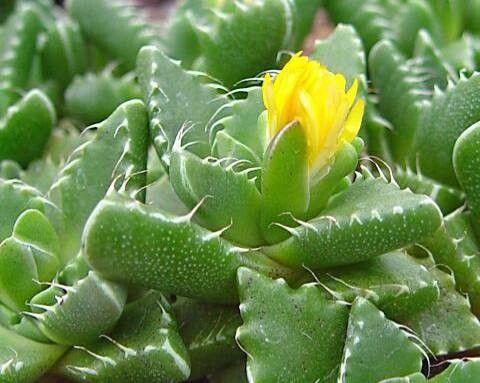
Hey there, fellow plant lovers! I’m so excited to chat with you today about a truly delightful succulent – Faucaria gratiae, often called the Tiger Jaws plant. Its star-shaped, fuzzy leaves with their distinctive “teeth” are just pure charm. And let me tell you, propagating these little beauties is incredibly rewarding. It’s a fantastic way to expand your collection, share the joy with friends, or simply get that thrill of watching something new grow from a tiny piece. For beginners, I’d say Faucaria gratiae is moderately easy to propagate. It’s not as carefree as some succulents, but with a little attention, you’ll be successful.
The Best Time to Start
The sweet spot for propagating Faucaria gratiae is during its active growing season, which generally falls in the late spring through summer. This is when the plant is energized and ready to put out new growth, making it more receptive to rooting. Trying to propagate in the cooler months might lead to slower or unsuccessful results.
Supplies You’ll Need
Gathering your supplies beforehand makes the whole process much smoother. Here’s what I usually have on hand:
- Sharp, clean pruning shears or a knife: For making precise cuts. Sterilize them with rubbing alcohol before and after use!
- Well-draining succulent or cactus potting mix: This is crucial. You can buy a commercial blend or make your own with potting soil, perlite, and coarse sand.
- A shallow tray or small pots: For your cuttings to root in. Terra cotta pots are great because they breathe.
- Optional: Rooting hormone: This can give your cuttings a little boost, though Faucaria gratiae is often pretty good at rooting on its own.
- Optional: A spray bottle: For gentle misting.
- Optional: Bottom heat source (like a seedling mat): This can really speed up the rooting process.
Propagation Methods
Faucaria gratiae is most commonly propagated by division or by taking offsets (pups). While you can try stem cuttings, they’re a bit trickier and less reliable for this particular plant, so I focus on the parts that are already ready to go.
1. Division (for established clumps)
If your Faucaria gratiae has started to form a nice clump, this is a fantastic method.
- Gently remove the parent plant from its pot. Try to keep the soil ball intact as much as possible.
- Carefully brush away excess soil from the roots. You’re looking for naturally occurring divisions where new plantlets are emerging from the base of the main plant.
- With clean hands or a gentle wiggle, separate the offsets from the mother plant. You’re aiming to get each new piece with its own root system, if possible. If a piece doesn’t have roots, don’t worry too much; it can still root.
- Allow the cut surfaces to callus for a day or two in a dry, airy spot. This helps prevent rot.
- Pot the divisions into their own small pots filled with your well-draining succulent mix. Don’t water immediately.
- Place them in bright, indirect light and wait for about a week or so before giving them their first light watering.
2. Offset (Pup) Propagation
This is really the most popular and successful way to propagate Faucaria gratiae. You’ll often find small “pups” growing at the base of a mature plant.
- Wait for the pups to be a decent size. Ideally, they should be at least an inch or two across and have started to develop their own tiny roots.
- Gently remove the pup from the mother plant. You can often just pull them off by hand if they’re ready. Sometimes, you might need to use your sterile shears to make a clean cut close to the base of the parent.
- Allow the cut or broken edge to dry and form a callus. This is super important! Let the pup sit out in a dry, bright spot for 2-5 days, until the wound looks healed and dry. Skipping this step is a common reason for rot.
- Prepare a small pot with your well-draining succulent mix.
- Gently insert the callused end of the pup into the soil. You don’t need to bury it deeply, just enough to keep it upright. You can use a small pebble to help support it if it’s wobbly.
- Place the pot in bright, indirect light. Avoid direct sun initially, as it can scorch the tender new plant.
- Hold off on watering for about 7-10 days. This encourages the pup to start searching for moisture and develop its own roots. After that, water sparingly when the soil is dry.
The “Secret Sauce” (Pro Tips)
Here are a couple of things I’ve learned over the years that really give you an edge:
- The “Air-Dry” is Non-Negotiable: I can’t stress this enough. That callus formation is your best friend against rot. Let those cuttings or pups dry thoroughly. Seriously, don’t rush it!
- Bottom Heat is Your Ally: If you have a seedling heat mat, use it! Placing your pots on a gentle heat source (around 70-75°F or 21-24°C) can dramatically speed up the rooting process. You’ll see roots forming much faster. Just make sure the heat isn’t too intense.
Aftercare & Troubleshooting
Once your Faucaria gratiae starts to show signs of rooting – usually a slight resistance when you gently tug it, or you might even see tiny roots peeking out of the drainage holes – you can begin treating it like a small mature plant.
- Watering: Water when the soil is completely dry to the touch. Overwatering is the quickest way to kill a new cutting. Start with light watering and gradually increase as the plant establishes.
- Light: Continue to provide bright, indirect light. As it grows stronger, you can slowly introduce it to more direct morning sun.
- Common Issues:
- Rot: This is the most common problem, and it’s almost always due to too much moisture or not allowing cuts to callus. If you see a cutting turning mushy and brown, it’s likely rot. You may be able to salvage a healthy portion if you catch it early.
- Shriveling: If your pup shrivels up completely and doesn’t root, it might be too dry, or it just wasn’t viable to begin with. Sometimes luck plays a part!
Happy Propagating!
See? It’s not rocket science, just a little bit of patience and observation. Don’t get discouraged if your first attempt isn’t picture-perfect. Every gardener has had their share of failures – that’s how we learn! Enjoy the process of nurturing these little Tiger Jaws. You’ll be amazed at how rewarding it is to watch a new plant thrive. Happy gardening!
Resource:
https://identify.plantnet.org/k-world-flora/species/Faucaria%20gratiae%20L.Bolus/data