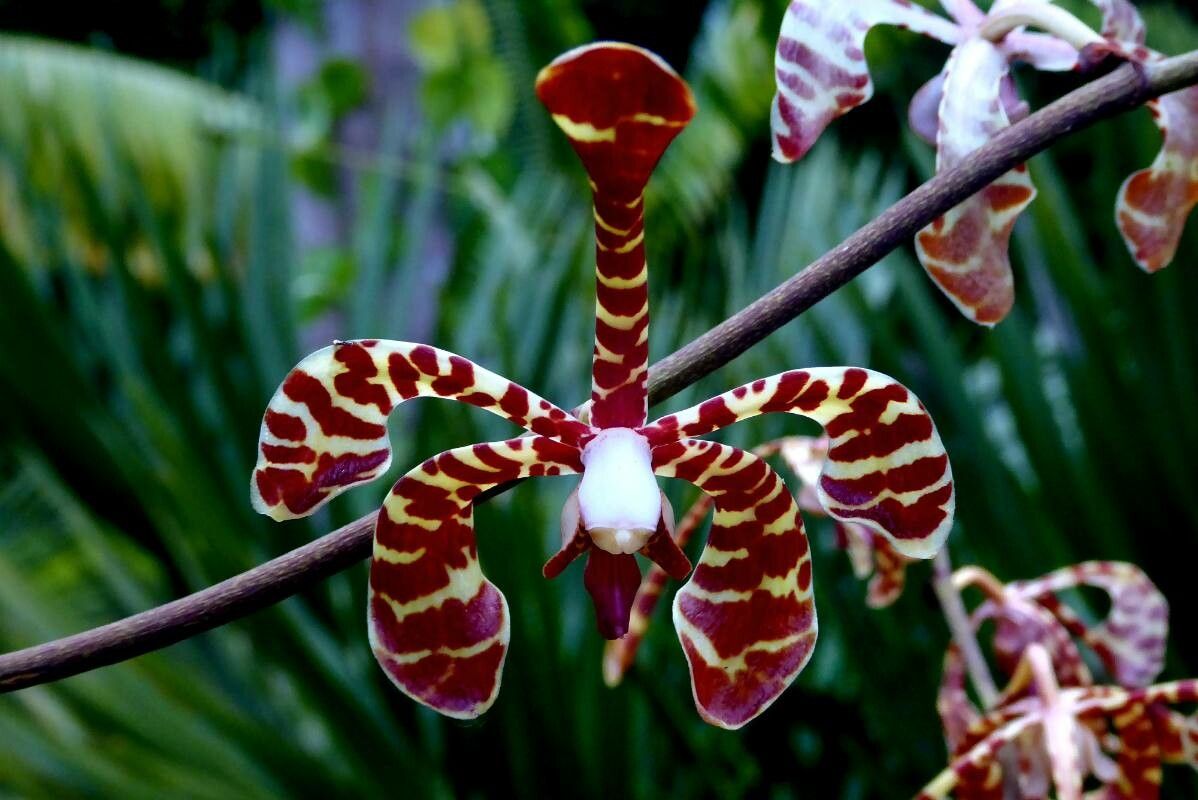
Oh, hello there! Come on in and grab a cuppa. I’m so glad you’re interested in propagating Arachnis flos-aeris, also known as the Spider Orchid. It’s such a fascinating plant, isn’t it? Those long, trailing stems reaching out like graceful arms, adorned with these wonderfully unique, spidery blooms. Seeing a new one sprout from your own efforts feels like a little miracle, I tell you. Now, to be upfront, Arachnis flos-aeris isn’t exactly a beginner’s first foray into propagation. It can be a touch more… discerning than, say, a pothos. But with a little know-how and a dash of patience, you absolutely can succeed!
The best time to get started with propagating Arachnis flos-aeris is when the plant is actively growing, usually late spring through early summer. You want to see healthy, vigorous new shoots emerging. This is when the plant has the most energy reserves to put into developing new roots. Attempting it when the plant is dormant or stressed is just asking for disappointment.
You won’t need a whole lot of fancy equipment to get going. Here’s what I usually have on hand:
- Sharp, sterile pruning shears or a keen knife: A clean cut is crucial for preventing disease.
- A rooting hormone powder or gel: This gives your cuttings a real boost.
- A well-draining potting mix: I like a blend of orchid bark, perlite, and a little bit of sphagnum moss. Orchids hate soggy feet!
- Small pots or propagation trays: Make sure they have drainage holes.
- A clear plastic bag or a propagation dome: This helps maintain humidity.
- Water: For keeping things moist.
The most successful method for Arachnis flos-aeris is definitely stem cuttings. Here’s how I do it:
- Find a healthy stem: Look for a mature stem that has at least two or three pseudobulbs (those swollen stem segments). You want to avoid very new, floppy growth or old, woody stems.
- Make the cut: Using your sterilized shears, make a clean cut just below a pseudobulb. This is where new roots will eventually emerge.
- Prepare the cutting: You can leave a couple of leaves on the cutting, but I usually trim off any overly large ones to reduce moisture loss. If you’re taking a longer section, you can even cut it into smaller segments, ensuring each segment has at least one pseudobulb.
- Dip in rooting hormone: Lightly moisten the cut end of the stem and then dip it into your rooting hormone powder or gel. Tap off any excess.
- Plant it up: Fill your small pot with your well-draining mix. Make a small hole in the center and gently insert the cutting, ensuring the pseudobulb is nestled just below the surface of the mix. Firm the mix around the stem to keep it upright.
- Create a humid environment: Water the potting mix thoroughly until it drains freely. Then, cover the pot with a clear plastic bag or place it in a propagation dome. This mini-greenhouse is key!
Now for a couple of little “secrets” that have made all the difference for me over the years:
- Bottom heat is your friend: Orchids love warmth. Placing your pots on a heated propagation mat can significantly speed up root development. It mimics the warmth they’d experience in their native environment.
- Don’t drown your dreams: While humidity is essential, consistently waterlogged potting mix is the enemy. Let the surface of the mix dry slightly between waterings. You want it consistently moist, not soggy. Stick your finger in to check – if it feels dry about an inch down, it’s time for a drink.
Once you start seeing roots emerging from the drainage holes or the potting mix looks like it’s starting to form a little clump, you know you’re winning! At this stage, you can gradually acclimate your new orchid to lower humidity. Start by opening the plastic bag for a few hours each day, then remove it altogether for longer periods. Continue to water as needed, letting that mix dry out a little between waterings.
What to watch out for? The biggest foe is rot. If your cutting turns mushy, black, or develops a foul smell, it’s usually a sign of too much moisture and not enough air circulation. If you see this happening, try to remove the affected part immediately, improve drainage, and reduce watering frequency. Yellowing leaves can also be a sign of stress, but don’t panic if a leaf or two yellows; focus on healthy stem and root development.
Propagating a spider orchid truly is a labor of love. There might be a few tries before you get it perfect, and that’s completely okay. Gardening is all about learning, observing, and enjoying the journey. So, don’t be discouraged if your first attempt isn’t an instantaneous success. Keep nurturing them, and soon you’ll have a whole collection of these beauties to enjoy. Happy growing!
Resource:
https://identify.plantnet.org/k-world-flora/species/Arachnis%20flos-aeris%20(L.)%20Rchb.f./data