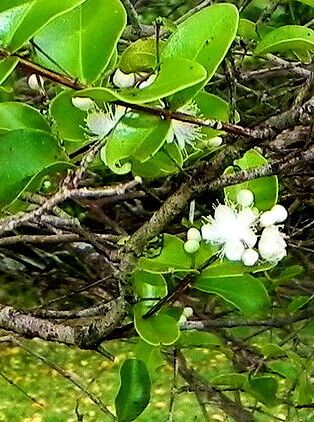
Oh, Phyllanthus conjugatus! Isn’t that a little gem to have in the garden or on the windowsill? I’ve always loved its delicate, fern-like foliage and the way it creates such a lush, green cloud. Plus, who doesn’t love the idea of multiplying their plant treasures? Propagating this beauty is a wonderfully satisfying way to share the green love. For me, it’s not generally a tricky plant to start from, which is great news if you’re just dipping your toes into propagation.
The Best Time to Start
When I’m looking to get more Phyllanthus conjugatus, I always aim for the spring or early summer. This is when the plant is really hitting its stride, growing actively, and has plenty of vigor. Cuttings taken during this period tend to root much faster and with fewer fuss. You can sometimes get away with it in late summer, but you might find the rooting process is a bit slower.
Supplies You’ll Need
Here’s what I usually gather before I get started:
- Sharp, clean pruning shears or a sharp knife: Essential for making clean cuts without damaging the stem.
- A good quality potting mix: I like a well-draining blend, often with perlite or coarse sand mixed in.
- Small pots or trays: Clean ones are a must to prevent disease.
- Rooting hormone (optional but recommended): This can give your cuttings a helpful boost.
- A watering can with a fine rose or a spray bottle: For gentle watering.
- Clear plastic bags or a propagator: To create a humid microclimate.
- A small trowel (optional): If you’re working with divisions.
Propagation Methods
Phyllanthus conjugatus is quite adaptable, and I find a couple of methods work particularly well.
1. Stem Cuttings
This is my go-to for Phyllanthus conjugatus. It’s straightforward and usually yields excellent results.
- First, select a healthy, non-flowering stem. Look for one that’s somewhere between new growth and old, mature stem – a bit firm but still flexible.
- Using your sharp shears or knife, take a cutting about 4-6 inches long. Make the cut just below a leaf node (where a leaf attaches to the stem).
- Gently remove the lower leaves from the cutting, leaving just a few at the top. This prevents them from rotting once buried.
- If you’re using rooting hormone, dip the cut end into the powder or gel. Tap off any excess.
- Prepare your pot with your well-draining potting mix. Make a small hole in the center with your finger or a pencil.
- Gently insert the cutting into the hole, ensuring the leaf nodes that were below the soil line are covered. Firm the soil gently around the stem.
- Water thoroughly but gently.
- Cover the pot with a clear plastic bag or place it in a propagator. This creates the humidity cuttings need to root. Make sure the leaves don’t touch the sides of the bag if you can help it.
- Place the pot in a bright location, but out of direct sunlight.
2. Division
If you have a larger, established clump of Phyllanthus conjugatus, dividing it is a fantastic way to get several new plants at once.
- The best time for this is also spring.
- Gently remove the entire plant from its pot, or carefully dig it up from the garden.
- Identify natural divisions in the root ball. You can often see where new shoots are emerging.
- Using your hands or a clean, sharp knife or trowel, gently separate the plant into smaller sections. Each division should have some healthy roots and at least one or two stems.
- Pot up each division into its own pot filled with your well-draining potting mix.
- Water well and place in a bright spot, just as you would a new cutting.
The “Secret Sauce” (Pro Tips)
Here are a couple of things I’ve learned over the years that really make a difference:
- When you’re placing cuttings in pots, don’t be afraid to take multiple cuttings per pot. They can often provide each other with a bit of support and humidity, increasing your chances of success. Just make sure they have a little space to breathe.
- Bottom heat can be a game-changer, especially if your home tends to be a bit cooler. I’ve had great success placing my propagation trays on a seedling heat mat. It encourages the roots to develop much more quickly by keeping the soil temperature consistently warm.
Aftercare & Troubleshooting
Once your cuttings have been in their humid environment for a few weeks, you might start to see signs of new growth – a good indication that roots are forming!
- When you see new leaves emerging, it’s a sign they’ve rooted. You can gradually start to acclimate them to lower humidity by opening the plastic bag a little each day over a week or so.
- Once they are clearly growing, you can remove the plastic bag entirely.
- Continue to water regularly, keeping the soil consistently moist but not waterlogged.
- The most common issue you’ll encounter is rot. If a cutting turns mushy and black, it’s usually a sign of too much moisture and not enough air circulation. If you see this, remove the affected cutting immediately to prevent it from spreading. If the whole pot seems problematic, it might be best to start fresh with new cuttings.
A Encouraging Closing
Propagating plants is a journey of patience, observation, and a little bit of faith. Don’t be discouraged if your first few attempts aren’t perfect. Every gardener has lost a cutting or two! Just keep trying, pay attention to what your plants are telling you, and enjoy the magic of bringing new life into your home. You’ve got this!
Resource:
https://identify.plantnet.org/k-world-flora/species/Phyllanthus%20conjugatus%20M.Schmid/data