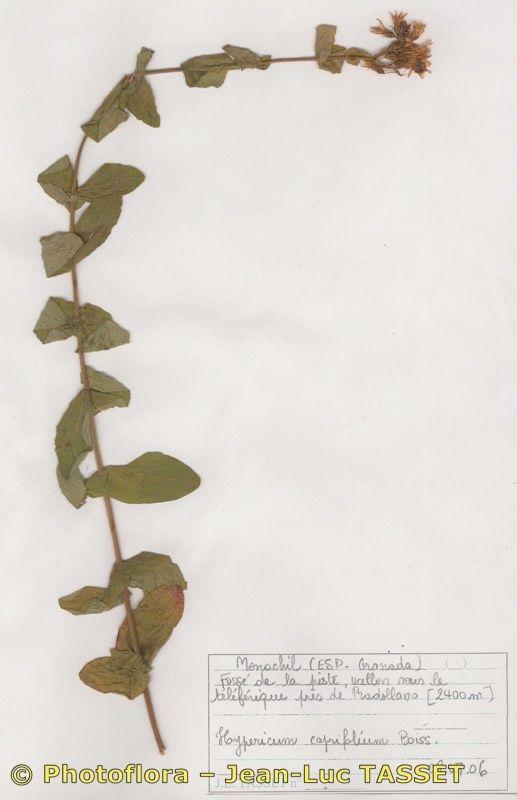
Oh, hello there! It’s so lovely to have you join me in my little corner of the garden today. We’re going to chat about one of my absolute favorites: Hypericum caprifolium, or St. John’s Wort, as it’s commonly known. I just adore this plant. Those cheerful, star-shaped yellow blooms have a way of brightening up any spot, and they often carry a lovely, subtle fragrance. Plus, knowing you can create more of these beauties from just one plant? That’s a gardener’s dream, if you ask me.
Now, I know some propagation can feel a bit daunting, and you might be wondering if this is a project for seasoned pros or if a beginner can jump in. I’m happy to tell you that Hypericum caprifolium is quite generous with new growth, making it a truly rewarding plant to propagate, even for those just starting their gardening journey. You’ll be surprised how easily it lends itself to new life!
The Best Time to Start
When it comes to getting the most bang for your buck (or, shall I say, bloom for your effort!), late spring to early summer is your golden ticket. This is when the plant is actively growing, and you’ll find nice, pliable new shoots that are eager to root. Think of it as the plant really hitting its stride – perfect for sharing that vitality.
Supplies You’ll Need
Let’s get our toolkit ready. You don’t need anything too fancy, just the basics.
- Sharp pruning shears or a clean, sharp knife: For a clean cut, which is crucial.
- A good quality potting mix: I like a blend of peat moss (or coco coir for a more sustainable option) and perlite. This ensures excellent drainage, which is key for cuttings.
- Rooting hormone (optional but recommended): This gives your cuttings a little boost and encourages faster root development. Look for one formulated for softwood or semi-hardwood cuttings.
- Small pots or trays: Clean ones are a must to prevent disease.
- A plastic bag or propagator lid: To create a humid environment.
- Water: For misting and settling the soil.
- A small watering can or spray bottle: For gentle watering.
Propagation Methods
Hypericum caprifolium is wonderfully amenable to a few different methods, but for ease and success, stem cuttings are my go-to.
Stem Cuttings:
- Find your material: Look for healthy, non-flowering shoots that are about 4-6 inches long. They should be somewhat flexible but not floppy. These are often called “softwood” or “semi-hardwood” cuttings, depending on how mature they are.
- Make the cut: Using your clean pruning shears or knife, take a cutting just below a leaf node (where a leaf attaches to the stem). This is where the root-forming cells are often most active.
- Prepare the cutting: Gently strip off the lower leaves. You want to leave just a couple of leaves at the top. If the remaining leaves are very large, you can even cut them in half horizontally to reduce water loss.
- Apply rooting hormone (if using): Dip the cut end of the stem into the rooting hormone powder, tapping off any excess.
- Plant your cuttings: Fill your small pots with the moist potting mix. Make a small hole in the center with your finger or a pencil. Insert the cut end of the stem into the hole, ensuring a few leaf nodes are below the soil surface. Gently firm the soil around the cutting.
- Water gently: Water thoroughly to settle the soil and ensure good contact with the cutting.
- Create humidity: Place a plastic bag over the pot, securing it around the rim with a rubber band or tape. Alternatively, use a propagator lid. This creates a mini-greenhouse effect.
- Place in bright, indirect light: Find a spot away from direct, harsh sunlight. A windowsill that gets bright morning sun is often perfect.
The “Secret Sauce” (Pro Tips)
Here are a couple of tricks I’ve picked up over the years that really make a difference:
- Don’t let those precious leaves touch the water (if you were tempted to try water propagation): While some plants root readily in water, for Hypericum, I find direct contact with water can encourage rot before roots even have a chance to form on cuttings. Even with soil propagation, avoid letting leaves rest on the soil surface unnecessarily.
- Bottom heat is your friend: If you have a heated propagator mat or can place your pots on top of a gently warm surface (like a router or near a warm appliance, but not too hot!), it can significantly speed up the rooting process. It mimics the warmth of spring soil and gives those roots a real kick-start.
- Be patient and don’t overwater: Resist the urge to constantly check or water your cuttings. The humidity inside the bag should keep them turgid. Overwatering is one of the fastest ways to lose cuttings to rot. Let the soil surface dry slightly between waterings.
Aftercare & Troubleshooting
Once your cuttings have been planted, keep an eye on them. You’ll know they are starting to root when you see new leaf growth appearing from the upper nodes or a gentle tug on the cutting feels like it’s anchored. This can take anywhere from 3 weeks to a couple of months.
The most common issue you might encounter is rot. It often presents as the stem turning black and mushy near the soil line, or the leaves wilting and yellowing. This is usually a sign of too much moisture and not enough air circulation. If you see this, sadly, that cutting is likely lost. Remove it immediately to prevent it from affecting others. Ensure your soil mix is free-draining, and you’re not overwatering.
Once roots have formed and you see healthy top growth, it’s time to gradually acclimate your new plant to less humid conditions. You can start by opening the bag for a few hours each day. When they are robust enough, you can transplant them into slightly larger pots. Treat them much like you would a seedling, keeping the soil consistently moist but not waterlogged.
A Encouraging Closing
Propagating Hypericum caprifolium is such a wonderful way to expand your garden’s beauty. It’s a process that connects you more deeply with your plants. Remember to be patient with yourself and with your little green cuttings. Each attempt is a learning experience, and the joy of seeing those first tiny roots emerge is truly one of gardening’s greatest rewards. Happy propagating!
Resource:
https://identify.plantnet.org/k-world-flora/species/Hypericum%20caprifolium%20Boiss./data