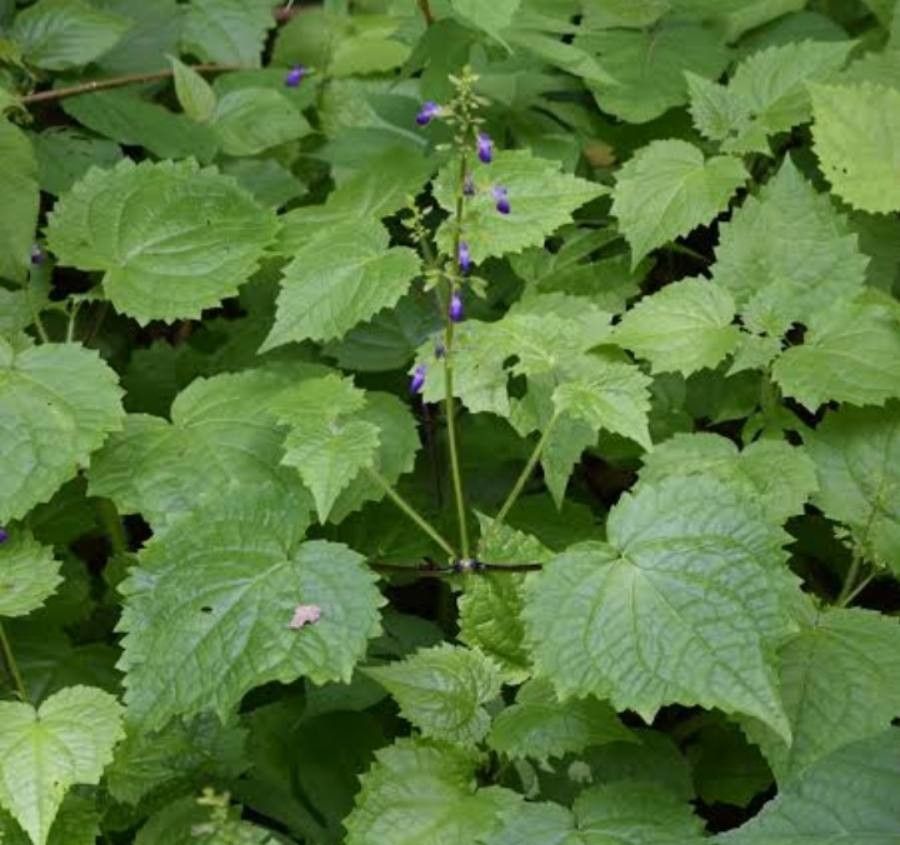
Oh, hello there! I’m so glad you’ve found your way to my little corner of the internet. Today, we’re going to dive into something truly special: propagating Salvia acerifolia.
This handsome sage, with its lovely purple flowers, is a real garden charmer. It brings a lovely splash of color and a delightful fragrance. The best part? Growing your own from cuttings or divisions is incredibly satisfying. It’s also a fantastic way to share these beauties with fellow garden lovers. While Salvia can sometimes be a bit finicky, Salvia acerifolia is actually quite forgiving, making it a wonderful choice for those just dipping their toes into plant propagation. You’ve got this!
The Best Time to Start
For the highest chance of success with Salvia acerifolia, I always recommend starting in late spring or early summer. This is when the plant is actively growing, and the new wood is flexible and full of life. Look for stems that are semi-hardwood – they’ve lost that brand new, super-soft feel but aren’t woody like old branches.
Supplies You’ll Need
Gathering your tools beforehand makes the process so much smoother. Here’s what you’ll want to have on hand:
- Sharp pruning shears or a clean knife: For making clean cuts.
- Rooting hormone (optional but helpful): A powder or gel that encourages root development.
- Well-draining potting mix: A blend of perlite, peat moss, and vermiculite works wonderfully. You can also use a mix specifically for cuttings.
- Small pots or trays: With drainage holes, of course!
- Plastic bags or a propagator: To create a humid environment.
- Watering can with a fine rose: For gentle watering.
Propagation Methods
There are a couple of ways we can coax new Salvia acerifolia plants into existence. My favorite for this particular variety is stem cuttings, but division is also a great option.
Stem Cuttings
This is my go-to for Salvia acerifolia. It’s straightforward and yields lovely results.
- Take your cuttings: In late spring or early summer, select healthy, non-flowering stems. Using your clean shears, take cuttings that are about 4-6 inches long. Make your cut just below a leaf node (where a leaf attaches to the stem).
- Prepare the cuttings: Gently remove the leaves from the bottom half of each cutting. You want to leave just a couple of leaves at the top. If the leaves are quite large, you can even cut them in half horizontally to reduce water loss.
- Apply rooting hormone (optional): Dip the cut end of each stem into your rooting hormone, tapping off any excess. This step isn’t always necessary for Salvia, but it can give your cuttings a helpful boost.
- Plant the cuttings: Fill your small pots with your well-draining potting mix. Make a small hole in the center with your finger or a pencil. Insert the cut end of the Salvia stem into the hole, ensuring the nodes where you removed leaves are below the soil surface. Gently firm the soil around the stem.
- Water and cover: Water the soil thoroughly but gently. Then, cover the pots with a clear plastic bag or place them in a propagator to maintain high humidity. You can use stakes to keep the bag from touching the leaves.
Division
If your Salvia acerifolia is already a mature plant, you can often divide its root ball to create new plants, usually in early spring before new growth really takes off.
- Dig up the plant: Carefully dig around the established plant and lift it from the ground.
- Separate the root ball: Gently shake off excess soil. You should be able to see distinct clumps of roots and shoots. Use your hands or a clean knife to carefully pull or cut the root ball into sections. Make sure each section has both roots and healthy shoots.
- Replant: Plant each new division directly into well-prepared soil or into pots filled with your potting mix. Water them in well.
The “Secret Sauce” (Pro Tips)
You know, after years of tinkering, you learn a few little tricks that make all the difference.
- Don’t be afraid to cut it back a bit: If your cuttings look a little leggy or have too many large leaves, err on the side of pruning them back even further. It might feel counterintuitive, but fewer leaves mean less stress on the cutting as it tries to root.
- Bottom heat is your friend: If you can, place your pots on a warm propagation mat. This gently warms the soil from below, encouraging roots to form much faster. It’s like giving your little cuttings a cozy spa day!
- Fresh air is crucial: While humidity is key, don’t let your cuttings sit in stagnant air. Open the plastic bags or propagator lid for a few minutes each day to allow for air circulation. This helps prevent mold and rot.
Aftercare & Troubleshooting
Once you start seeing signs of new growth, like tiny leaves unfurling, that’s a good sign roots are forming!
- Gradually acclimate: Once roots have established, slowly reduce the humidity by opening the plastic bag or propagator vent more each day. This helps your new plants get used to normal conditions.
- Watering: Keep the soil consistently moist but not waterlogged. As the plants grow stronger, you can water them less frequently.
- Potting up: When your cuttings have a good root system and are showing strong new growth, you can pot them up into slightly larger pots with regular potting soil.
Now, what if things don’t go quite as planned? The most common issue you might encounter is rot. This usually happens when the soil is too wet and there isn’t enough air circulation. If you see a cutting turning black and mushy at the base, sadly, it’s time to discard it and start fresh, checking your watering and air circulation. Another sign of trouble is wilting that doesn’t improve after watering – this can indicate a lack of roots or overly dry conditions.
A Encouraging Closing
Propagating plants is a journey, my friends. There will be successes, and yes, sometimes there are a few lovely green failures along the way. Don’t get discouraged! Each attempt teaches you something new. Be patient with your Salvia acerifolia cuttings, give them a little love and the right conditions, and you’ll soon have a whole new collection to enjoy. Happy gardening!
Resource:
https://identify.plantnet.org/k-world-flora/species/Salvia%20acerifolia%20B.L.Turner/data