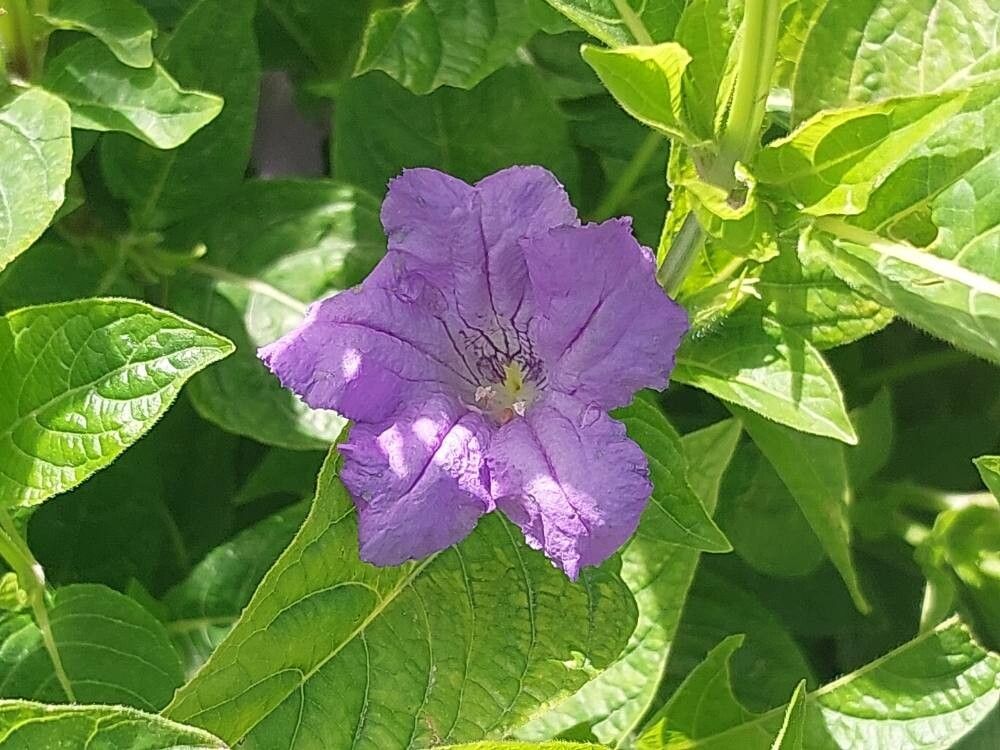
Well hello there, fellow plant enthusiast! It’s so lovely to have you join me today. We’re going to talk about a plant that’s been a real delight in my garden for years: Ruellia strepens, sometimes called Showy Ruellia or Wild Petunia. Its vibrant, trumpet-shaped flowers, often in shades of purple and blue, bring such a cheerful burst of color, and the best part? It’s incredibly rewarding to share it. Propagating Ruellia strepens is surprisingly straightforward, even for those of you just dipping your toes into the world of plant propagation. You’ll be amazed at how easily you can fill your garden or share with friends!
The Best Time to Start
My favorite time to get started with propagating Ruellia strepens is in late spring or early summer. This is when the plant is actively growing and has plenty of energy to put into root development. You’re looking for stems that are firm but not woody – think of them as being in that sweet spot between brand new, floppy growth and old, tough branches.
Supplies You’ll Need
Here’s what you’ll want to have on hand to set yourself up for success:
- Sharp Pruning Shears or a Clean Knife: For making clean cuts.
- Small Pots or Seed Trays: With drainage holes, of course!
- Well-Draining Potting Mix: I love a mix of seed-starting mix and perlite (about a 2:1 ratio) for good aeration.
- Rooting Hormone (Optional but Recommended): This gives your cuttings a little boost. Look for a powder or gel.
- Water: For keeping things moist.
- A Clear Plastic Bag or Dome: To create a humid environment around your cuttings.
- Labels: So you don’t forget what you planted where!
Propagation Methods
Ruellia strepens is quite amenable to a few different methods, but my go-to is stem cuttings. It’s quick, efficient, and usually has a high success rate.
Here’s how I do it:
- Select Your Cuttings: Find healthy, non-flowering shoots. Aim for 6- to 8-inch long pieces.
- Make the Cut: Using your clean shears or knife, cut just below a leaf node (the spot where a leaf attaches to the stem). This is where roots are most likely to form.
- Prepare the Cutting: Gently remove the lower leaves, leaving just a couple at the top. This prevents them from rotting in the soil.
- Apply Rooting Hormone (Optional): Dip the cut end of the stem into your rooting hormone, tapping off any excess.
- Plant Your Cuttings: Moisten your potting mix. Make a small hole with your finger or a pencil and insert the cut end of the stem, ensuring at least one leaf node is buried. Firm the soil gently around the cutting.
- Create Humidity: Water the soil lightly. Then, cover the pot with a clear plastic bag or a propagation dome. This traps moisture and creates a greenhouse effect.
- Placement: Place your pot in a bright spot out of direct sunlight.
Another wonderfully simple method is water propagation.
- Take Cuttings: Follow steps 1 and 2 above.
- Remove Lower Leaves: Just like with soil cuttings.
- Place in Water: Put the cuttings in a jar or glass of clean water, making sure no leaves are submerged.
- Change Water Regularly: Refresh the water every few days to keep it clean and oxygenated.
- Watch for Roots: You’ll start to see tiny white roots emerge within a couple of weeks. Once the roots are about an inch long, you can transplant them into soil.
For larger, established plants, division is also an option.
- Dig Up the Plant: In early spring, carefully dig up your mature Ruellia.
- Separate the Roots: Gently shake off excess soil and divide the root ball into smaller sections, each with healthy roots and some top growth.
- Replant: Plant the divisions in their new locations or pots as you would a whole plant.
The “Secret Sauce” (Pro Tips)
Now for a couple of my little secrets that often make all the difference!
First, when you’re using stem cuttings, remember humidity is king. If your cuttings start to look a bit sad or droopy *before roots have formed, it’s usually a sign they’re drying out. A quick misting of the leaves and ensuring that plastic bag is sealed tight can work wonders.
And here’s something I learned early on: bottom heat really speeds things up. If you have a seedling heat mat, simply place your pots of cuttings on top of it. This gentle warmth encourages root development from below, giving your cuttings a significant advantage. It’s like giving them a cozy foot spa!
Aftercare & Troubleshooting
Once you see new leaf growth peeking out, that’s your signal that roots have developed! Gently remove the plastic bag or dome to gradually acclimate your new plants to normal humidity. Continue to water them regularly, keeping the soil consistently moist but not waterlogged. As they grow stronger, you can start to fertilize them with a diluted liquid fertilizer every few weeks.
The most common issue you might encounter is rot. If your cuttings turn mushy and brown, it’s usually a sign of too much moisture and not enough air circulation. Make sure your soil is genuinely well-draining, and don’t let those pots sit in saucers full of water. If you see a cutting looking unhealthy, it’s best to remove it to prevent any potential spread.
A Gentle Wrap-up
Propagating Ruellia strepens is a truly satisfying journey. It’s a chance to multiply the beauty in your garden and share that joy with others. Be patient with your new plants; sometimes they take a little longer to get established. Just keep them happy, provide them with the right conditions, and enjoy the process of watching these little wonders grow. Happy gardening!
Resource:
https://identify.plantnet.org/k-world-flora/species/Ruellia%20strepens%20L./data