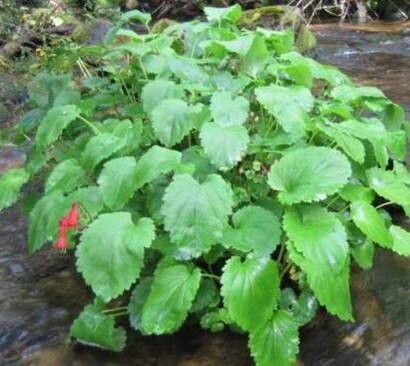
Oh, Ourisia ruellioides! If you’ve ever spotted this delightful little charmer in a shade garden, you know exactly why I’m so excited to talk about it today. With its delicate, orchid-like blooms and lush, glossy foliage, it just brings a touch of understated elegance to shady nooks. And the best part? You can easily multiply this beauty yourself! Propagating Ourisia ruellioides is incredibly rewarding, though I’ll be honest, it’s not the absolute easiest plant for a kitchen table beginner. But with a little guidance and patience, you’ll be swimming in new plants in no time.
The Best Time to Start
For the highest success rate, I always recommend propagating Ourisia ruellioides in late spring to early summer. This is when the plant is actively growing and has plenty of energy to put into developing new roots. Look for healthy, non-flowering stems. You can also divide established plants in early spring, just as new growth begins to emerge.
Supplies You’ll Need
Here’s what you’ll want to have on hand before you get started:
- Sharp, clean pruning shears or a sharp knife: Essential for clean cuts.
- Rooting hormone powder or gel: While not strictly mandatory for Ourisia, it can give your cuttings a significant boost.
- A well-draining potting mix: I like a blend of equal parts peat moss or coco coir, perlite, and a bit of compost. If you’re feeling fancy, a specific seed-starting mix works wonderfully.
- Small pots or seed trays: Clean ones are a must to prevent disease. Anything from 3-inch pots to cell trays will do.
- Plastic bags or a propagator: To create a humid environment for your cuttings.
- Watering can or spray bottle: For gentle watering.
- Labels and a marker: So you don’t forget what you’ve planted and when!
- (Optional) Bottom heat mat: This can speed up root development significantly.
Propagation Methods
Ourisia ruellioides is quite amenable to a couple of popular methods. Let’s dive in!
Stem Cuttings: My Go-To Method
This is my favorite way to propagate Ourisia. It’s efficient and gives you a good chance of success.
- Take your cuttings: Using your clean pruners, snip off healthy stems that are about 4-6 inches long. Look for stems that are firm but not woody. Remove any flowers or developing flower buds – they suck energy away from root formation.
- Prepare the cuttings: At the bottom of each cutting, remove the lower leaves. You want to expose a few nodes (where the leaves were attached).
- Dip in rooting hormone: If you’re using rooting hormone, dip the cut end into the powder or gel. Gently tap off any excess.
- Plant the cuttings: Fill your small pots with your well-draining mix. Make a small hole with your finger or a pencil and insert the cut end of the stem, ensuring at least one or two leaf nodes are buried in the soil. Gently firm the soil around the cutting.
- Water gently: Water the pots thoroughly but gently, just enough to moisten the soil.
- Create humidity: Cover the pots with a plastic bag or place them in a propagator. Make sure the plastic doesn’t touch the leaves as much as possible. If it does, prop it up with a skewer or two.
- Place in a bright, indirect light spot: Avoid direct sunlight, which can scorch delicate new growth. A warm spot is ideal.
Division: For Established Plants
If you have a mature Ourisia, division is a straightforward way to get more plants and revitalize the parent.
- Gently unpot the plant: Do this in early spring as new growth emerges or in the fall.
- Inspect the root ball: You’ll often see that the plant has formed distinct clumps.
- Separate the divisions: Using your hands or a sterile trowel, carefully pull or cut the root ball into smaller sections. Each division should have a good amount of healthy roots and some leafy growth.
- Replant immediately: Pot each division into its own pot with fresh, well-draining soil, or replant them directly into your garden beds. Water them in well.
The “Secret Sauce” (Pro Tips)
Here are a few things I’ve learned over the years that make a big difference:
- Keep those leaves dry! Especially if you’re using a plastic bag to create humidity, avoid letting the leaves sit in condensation. This is a surefire way to invite rot. If you see water pooling on the leaves, give the bag a gentle shake.
- Bottom heat is your friend: A gentle warmth from a heating mat can seriously speed up root development. It mimics the conditions of a tropical climate where Ourisia thrives, encouraging those roots to form much faster. Just make sure it’s not too hot – lukewarm is perfect.
- Sterilize, sterilize, sterilize! I can’t stress this enough. Before you start, all your tools – pruners, knives, pots – should be cleaned and ideally sterilized. A quick dip in rubbing alcohol is all it takes to prevent fungal diseases from taking hold in your fresh cuttings.
Aftercare & Troubleshooting
Once you start seeing new growth or feel resistance when you gently tug on a cutting (indicating roots!), it’s time to adjust their care.
- Acclimate gradually: As roots develop, slowly start to increase ventilation. Open the plastic bag for a few hours each day, gradually increasing the time until you can remove the bag entirely.
- Keep them consistently moist, not soggy: New roots are thirsty but also very susceptible to rot. Water when the top inch of soil feels dry.
- Watch for signs of trouble: The most common issue is rot. If your cuttings turn black and mushy, it’s usually a sign of too much moisture and not enough drainage or air circulation. Discard any rotting material immediately. If a cutting wilts drastically and doesn’t perk up after watering, it might be suffering from drought stress.
A Encouraging Closing
Propagating Ourisia ruellioides is a journey, and like any gardening endeavor, it requires a bit of patience. Don’t be discouraged if not every cutting takes. Celebrate the successes! Watching those tiny roots emerge and a new plant unfurl its first true leaves is one of the most satisfying feelings a gardener can have. So gather your supplies, get your hands in the soil, and enjoy the process of multiplying this little gem. Happy propagating!
Resource:
https://identify.plantnet.org/k-world-flora/species/Ourisia%20ruellioides%20(L.f.)%20Kuntze/data