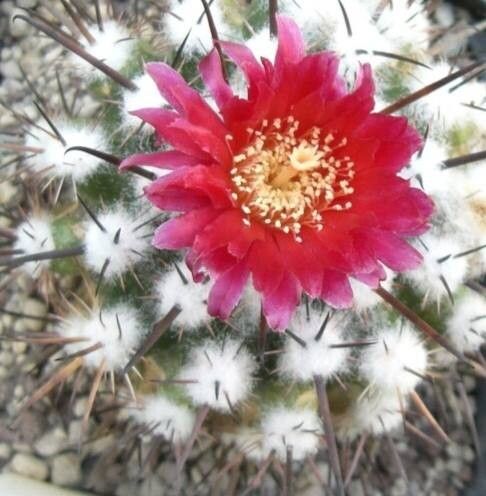
Oh, hello there, fellow plant lover! It’s so nice to have you join me. Today, we’re diving into the wonderful world of propagating Parodia subterranea. If you’ve ever admired the charming, almost otherworldly appearance of these little cacti, you’re in for a treat. Growing new ones from your existing plant is incredibly rewarding, and honestly, it’s not as daunting as you might think! For beginners, I’d say Parodia subterranea is moderately easy – a good step up once you feel comfortable with a few common houseplants.
The Best Time to Start
Generally, the warmer months are your best bet for giving your new propagations a good start. Think late spring through summer. This is when the plant is actively growing and has the energy to put out roots. I usually find the most success when I’m working with a well-established, healthy plant that’s showing signs of life. You’ll want to avoid propagating when the plant is dormant in winter.
Supplies You’ll Need
Here’s a quick rundown of what you’ll want to have on hand:
- Well-draining potting mix: A cactus and succulent mix is ideal. You can also make your own by combining potting soil with perlite or pumice.
- Sharp, clean knife or pruning shears: Sterilize them with rubbing alcohol to prevent disease.
- Rooting hormone (optional but recommended): This liquid or powder can give your cuttings a helpful boost.
- Small pots or trays: Make sure they have drainage holes!
- Gloves: Cacti can be prickly, and it’s always good to protect your hands.
- Spray bottle: For lightly misting the soil.
Propagation Methods
Let’s get our hands dirty! For Parodia subterranea, the most effective method is offsets, also known as “pups.” These are like little baby plants that sprout from the base of the mother plant.
- Locate the Offsets: Gently examine your Parodia subterranea. You’ll often see small, bulbous growths emerging from the soil level, right around the base of the main stem.
- Prepare Your Tools: Make sure your knife or shears are clean and sharp. This is crucial for a clean cut and minimizing stress on the plant.
- Gently Detach: Carefully work your way around the base of an offset. You want to sever it from the mother plant with as much of its own root system (if any has already developed) as possible. Sometimes, you can gently twist them off, but a clean cut is usually best.
- Allow to Callus: This is aSUPER important step for cacti. After you’ve detached the offset, set it aside in a dry, well-ventilated spot for several days, or even a week. You want the cut end to dry out and form a callus. This prevents rot when you plant it. Think of it like a little scab forming.
- Planting: Once the cut end has callused over, it’s time to plant! Fill your small pot with your well-draining potting mix. Make a small indentation in the soil and place the offset in it, burying the callused end up to its base. You don’t need to push it in too deep.
- Water Sparingly: Do not water immediately! Wait for at least a week after planting. When you do water, water lightly. The goal is to encourage the offset to search for moisture, which prompts root development.
The “Secret Sauce” (Pro Tips)
Now for a couple of little tricks that have made a big difference in my propagation success:
- Bottom Heat is Your Friend: If you have a propagation mat or can place your pots on a heat-generating surface (like near a warm appliance, but not directly on it!), it can really speed up root formation. Cacti love warmth when they’re trying to establish themselves.
- Mist, Don’t Drench: When you’re waiting for roots to develop on your potted offsets, resist the urge to drench the soil. A light misting every few days is usually enough to keep the soil from becoming bone dry, but still encourages the plant to seek moisture. Think of it as a gentle nudge, not a flood!
Aftercare & Troubleshooting
Once you see signs of new growth – perhaps a slight plumpness in the offset or even a tiny new spine – you know roots are forming! You can transition to a more regular watering schedule, but always let the soil dry out completely between waterings.
The most common challenge you’ll face is rot. If your offset turns mushy and dark, it’s usually a sign of too much moisture. If this happens, remove it immediately, and if there’s any healthy part left, you can try re-callusing and replanting it. Another sign of trouble is if it looks shriveled and dry; this might mean it isn’t getting enough water, or the roots haven’t established well enough.
A Encouraging Closing
Remember, gardening is a journey, and propagation is a beautiful part of it. Be patient with your Parodia subterranea offsets. Not every attempt will be a roaring success, and that’s perfectly okay! The joy is in the process, the learning, and the ability to multiply the beauty you already have in your home. Happy propagating!
Resource:
https://identify.plantnet.org/k-world-flora/species/Parodia%20subterranea%20F.Ritter/data