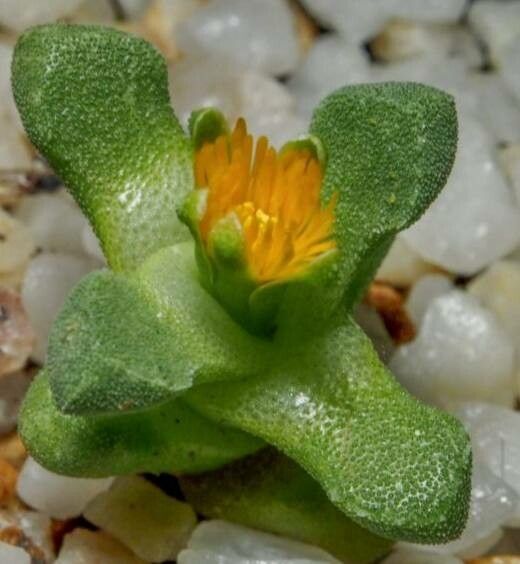
Oh, hello there! Pull up a chair and let’s chat about one of my favorite little treasures, Stomatium suaveolens. If you’ve ever been captivated by these charming, fleshy-leaved beauties, you’re in for a treat. Propagating them yourself is a truly rewarding experience, like nurturing a tiny seed of happiness that grows into something magnificent. And the best part? It’s not as intimidating as you might think! While not maybe an absolute beginner’s first plant, with a little guidance, you’ll be well on your way to a whole new collection.
The Best Time to Start
For Stomatium suaveolens, I find the late spring to early summer to be your golden window. This is when the plant is in its active growing phase, meaning it’s brimming with energy and ready to put out new roots. Starting them when it’s a bit warmer outside also encourages faster rooting.
Supplies You’ll Need
Here’s what I always keep on hand when I’m feeling inspired to propagate:
- Sharp pruning shears or a clean knife: For making precise cuts.
- Well-draining potting mix: A cactus and succulent mix is perfect, or you can create your own with equal parts potting soil and perlite or coarse sand.
- Rooting hormone (optional but helpful): A powder or gel makes a difference.
- Small pots or trays: With drainage holes, of course!
- Spray bottle: For gentle misting.
- Labels: So you don’t forget what you planted where!
Propagation Methods
The most successful way I’ve found to get more Stomatium suaveolens is through stem cuttings. It’s straightforward and usually gives a great success rate.
- Select a healthy stem: Look for a mature, healthy stem from your existing plant. It should be firm and not mushy or withered.
- Make a clean cut: Using your sharp shears or knife, take a cutting that’s about 2-4 inches long. Make the cut just below a leaf node – that’s the point where the leaves grow from the stem. This is where the magic happens for root development.
- Let it callus: This is a crucial step for succulents! Lay your cuttings out on a dry surface, away from direct sun, for 2-3 days. You want the cut end to form a dry scab, or callus. This prevents rot when you plant it.
- Plant your cutting: Once calloused, dip the cut end into your rooting hormone (if using). Then, gently insert the calloused end into your prepared well-draining potting mix. I usually plant a few cuttings per small pot.
- Water sparingly: After planting, give your cuttings a very light watering, just enough to settle the soil. We don’t want them sitting in soggy conditions.
The “Secret Sauce”
Now, for a couple of tricks I’ve learned over the years:
- The “Rooting Hormone Hug”: When dipping your cuttings in rooting hormone, don’t be shy. Give the cut end a good, even coating – think of it as a nice, encouraging hug for your new plant.
- A Warm Foundation: If you can, place your pots on a heating mat. Even a little bit of gentle bottom heat can significantly speed up root formation. It mimics the warmth they’d naturally experience underground.
Aftercare & Troubleshooting
Once you’ve planted your cuttings, patience is key! Keep them in a bright spot with indirect sunlight. You’ll want to continue watering very sparingly. Only water when the soil is completely dry. A light misting with your spray bottle is often all they need initially.
You’ll know your cutting has rooted when you gently tug on it and feel a bit of resistance, or when you see new growth emerging. This can take anywhere from a few weeks to a couple of months.
The most common issue you’ll encounter is rot. If you see your cutting turning mushy, black, or just generally looking unwell, it’s usually a sign of too much moisture. In this case, there’s not much you can do but discard it and try again, being extra careful with watering next time.
A Little Encouragement
So there you have it! Propagating Stomatium suaveolens is a delightful journey. Don’t be discouraged if your first attempt isn’t perfect. Each cutting you try is a learning experience. Enjoy the process, celebrate the tiny roots, and soon you’ll have a whole windowsill full of these gorgeous plants. Happy gardening!
Resource:
https://identify.plantnet.org/k-world-flora/species/Stomatium%20suaveolens%20Schwantes/data