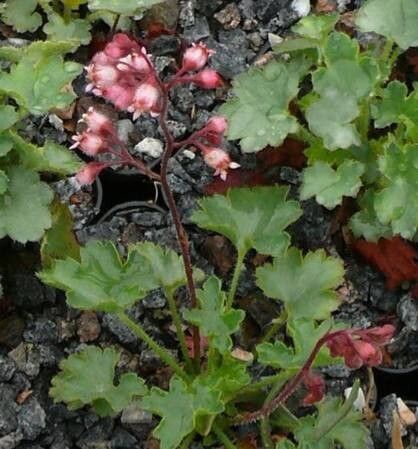
Hello fellow garden enthusiasts! I’m so glad you’ve stopped by. Today, we’re diving into the wonderful world of Heuchera abramsii, or as some lovingly call it, Abrams’ Coral Bells. These beauties are a standout in any garden with their delicate, often colorful foliage and lovely little flower stalks. Propagating them is a fantastic way to fill your garden or share these gems with friends.
Why Propagate Abrams’ Coral Bells?
There’s something incredibly satisfying about nurturing a new plant from a mere cutting or division. It doubles your enjoyment – you get more of what you love, and the act of growing is a reward in itself. Abrams’ Coral Bells are generally quite easy to propagate, making it a great starting point for those new to plant propagation. You’ll be amazed at how readily they establish!
The Best Time to Start
For the highest success rate with Heuchera abramsii, I always recommend propagating in late spring or early summer. This is when the plant is actively growing and has plenty of energy to put into developing new roots. You’re looking for healthy, vigorous growth, not something that’s stressed or just finished flowering.
Supplies You’ll Need
Gathering your supplies beforehand makes the whole process smoother. Here’s what I always have on hand:
- Sharp pruning shears or a clean knife: For making clean cuts.
- Small pots or propagation trays: With good drainage holes.
- Well-draining potting mix: A good blend is typically one part perlite, one part peat moss or coco coir, and one part coarse sand.
- Rooting hormone (optional but recommended): A powder or gel form works well.
- Watering can or spray bottle: For gentle watering.
- Labels and a marker: To keep track of what you’ve propagated.
Propagation Methods: Let’s Get Growing!
There are a couple of fantastic ways to multiply your Abrams’ Coral Bells.
Division (My Go-To for Established Plants)
This is my favorite method, especially for plants that have been in the ground for a few years and are starting to look like a small clump.
- Gently unearth the plant: Carefully dig around the base of your Heuchera, lifting the entire root ball from the soil.
- Clean off excess soil: Gently shake or rinse away most of the old soil so you can clearly see the root structure and individual crowns.
- Identify natural divisions: Look for spots where the plant naturally splits into smaller sections, each with its own roots and at least one or two leafy stems.
- Separate the divisions: Using your hands or a clean knife, carefully split the root ball into smaller clumps. If you encounter tough roots, don’t be afraid to use your knife. We want each division to have a healthy root system.
- Replant immediately: Pot up each division into its own small pot filled with your well-draining mix, planting them at the same depth they were previously growing. Water them in gently.
Stem Cuttings (For a More Abundant Start)
This method is great if you want many new plants or have a particularly healthy specimen you want to encourage.
- Select healthy stems: Look for upright, non-flowering stems that are at least 3-4 inches long.
- Make clean cuts: Using your sharp shears or knife, cut the stem just below a leaf node (where a leaf attaches to the stem).
- Prepare the cutting: Remove the lower leaves, leaving only a few at the top. If the leaves are very large, I’ll often snip them in half to reduce water loss.
- Apply rooting hormone (optional): Dip the cut end into your rooting hormone, tapping off any excess.
- Insert into soil: Make a small hole in your prepared potting mix with your finger or a pencil, then insert the cutting, ensuring the lower leaf nodes are below the soil surface. Gently firm the soil around the stem.
- Water gently: Water the soil lightly, or mist the leaves and soil surface.
The “Secret Sauce” (Pro Tips)
Here are a few little tricks I’ve learned over the years that seem to give my Heucheras an extra boost:
- Don’t let the leaves touch the water when water propagating: While I’ve focused on soil methods, if you ever try water, make sure only the stem is submerged, not the leaves. Wet leaves can lead to rot very quickly.
- Bottom heat is your friend: If you’re struggling with cuttings rooting, placing your pots on a propagation mat set to a gentle warmth (around 70-75°F or 21-24°C) can significantly speed up root development. It mimics the warmth of spring soil.
- Give them a humid home: Newly propagated plants are more susceptible to drying out. I often place my pots or trays inside a clear plastic bag or propagator lid to create a mini-greenhouse effect. This drastically reduces water loss from the leaves while they focus on growing roots. Just remember to vent it periodically to prevent mold!
Aftercare & Troubleshooting
Once your Heucheras have rooted – and you can often tell by a gentle tug on the stem or by seeing new growth – it’s time for a little extra pampering.
Continue to keep the soil consistently moist but not waterlogged. As they grow stronger, you can gradually introduce them to more typical watering routines. You can start fertilizing them with a diluted liquid feed about a month after you see active new growth.
The most common issue you’ll face is rot, which is usually a sign of overwatering or poor drainage. If you see a cutting turning black and mushy, or an entire division wilting despite being watered, it’s a strong indicator of rot. Unfortunately, a rotted cutting or division is usually a lost cause, but don’t despair! It’s a learning experience. Just remove the affected material and try again, paying extra attention to your watering and soil moisture.
A Little Patience Goes a Long Way
Propagating Heuchera abramsii is a rewarding journey, not a race. Be patient, observe your new plants, and celebrate each little success. Happy gardening, and may your Abrams’ Coral Bells flourish!
Resource:
https://identify.plantnet.org/k-world-flora/species/Heuchera%20abramsii%20Rydb./data