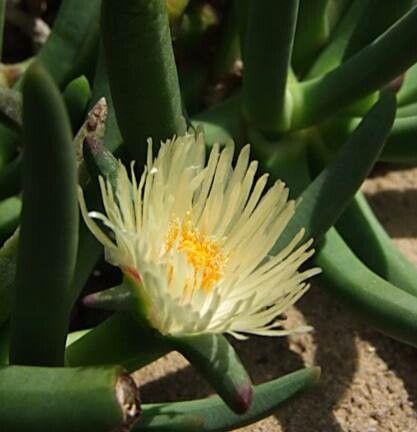
Oh, Cylindrophyllum calamiforme! If you haven’t met this fascinating succulent yet, prepare to be charmed. Its upright, cylindrical leaves, often tinged with beautiful dusky purples or greens, bring such a unique architectural element to any collection. And the best part? Propagating it is a wonderfully rewarding experience, seeing those tiny new life forms emerge from what you’ve started. For beginners, I’d say it’s moderately easy. It doesn’t require fussy conditions, but a little attention to detail goes a long way.
The Best Time to Start
The sweet spot for propagating Cylindrophyllum calamiforme is during its active growing season, which generally falls in the spring and early summer. This is when the plant is full of energy and will readily produce roots. Trying to propagate when it’s stressed or dormant will significantly decrease your chances of success.
Supplies You’ll Need
Gathering your tools beforehand makes the whole process so much smoother. Here’s what I keep on hand:
- Sharp, clean pruning shears or a knife
- Rooting hormone powder (optional, but I find it gives an extra boost)
- Well-draining potting mix (a cactus/succulent mix is perfect, or you can create your own by adding perlite or pumice to regular potting soil)
- Small pots or trays with drainage holes
- A watering can with a fine rose or a spray bottle
- Labels to mark your new plants!
Propagation Methods
We’ll focus on the two most reliable methods for this beauty: stem cuttings and division.
Stem Cuttings
This is my go-to for Cylindrophyllum calamiforme. It’s straightforward and often yields multiple new plants from a single parent.
- Select a healthy stem. Look for a mature, firm stem that’s at least a few inches long.
- Make a clean cut. Using your sharp shears or knife, take a cutting just above a leaf node. You want a piece that has several leaves on it.
- Allow it to callus. This is super important! Let the cut end of the stem dry out and form a callus for 2-3 days in a dry, shady spot. This prevents rot when you plant it.
- Apply rooting hormone (optional). Once callused, dip the cut end into rooting hormone powder.
- Plant the cutting. Insert the callused end about an inch deep into your well-draining potting mix. Gently firm the soil around it.
- Initial watering. Water lightly or mist the soil surface. Don’t drench it.
Division
If your Cylindrophyllum calamiforme has become bushy and has multiple growth points at the base, division is a great option.
- Gently remove the plant from its pot.
- Inspect the root ball. You’ll be looking for natural breaks where you can separate sections.
- Carefully pull or cut the divisions apart. Try to keep as much of the root system intact on each division as possible. If you need to cut through roots, use clean tools.
- Allow any cut roots to callus. Just like with stem cuttings, let the freshly divided sections sit for a day or two to callus over any wounds.
- Pot up the divisions. Plant each division in its own pot with well-draining soil.
The “Secret Sauce” (Pro Tips)
Over the years, I’ve learned a few tricks that make propa-gating these little guys even more successful.
- Bottom heat is your friend. For stem cuttings, placing the pot on a heat mat specifically designed for plants can significantly speed up root development. It mimics the warmth of its natural environment.
- Don’t be a water-giver too soon. After planting your cuttings or divisions, resist the urge to water them immediately. Wait a few days to a week. This allows the plant to focus energy on rooting rather than on immediate water uptake, and further reduces the risk of rot.
- Air circulation is key. When your cuttings are callusing or waiting for roots, make sure they are in a well-ventilated area. Stagnant, humid air is the enemy of fresh cuttings.
Aftercare & Troubleshooting
Once you start seeing new growth or feel a gentle tug when you lightly pull on a cutting, you know roots are forming!
- Start watering regularly. Once roots are established, you can begin watering more normally, allowing the soil to dry out completely between waterings.
- Gradual transition. If your cuttings were in a protected, humid environment, gradually expose them to normal room conditions to avoid shock.
- Watch for rot. The most common problem is rot. If a cutting turns mushy, black, or watery, it’s usually a sign of too much moisture and not enough drainage or air. Unfortunately, a rotted cutting usually can’t be saved. Be sure your soil is draining well and don’t overwater!
A Encouraging Closing
Propagating Cylindrophyllum calamiforme is a delightful journey. Be patient, trust the process, and don’t be discouraged if not every attempt is a runaway success. Each cutting and division is a chance to learn and grow, and soon you’ll have a whole new generation of these wonderful plants to enjoy! Happy gardening!
Resource: