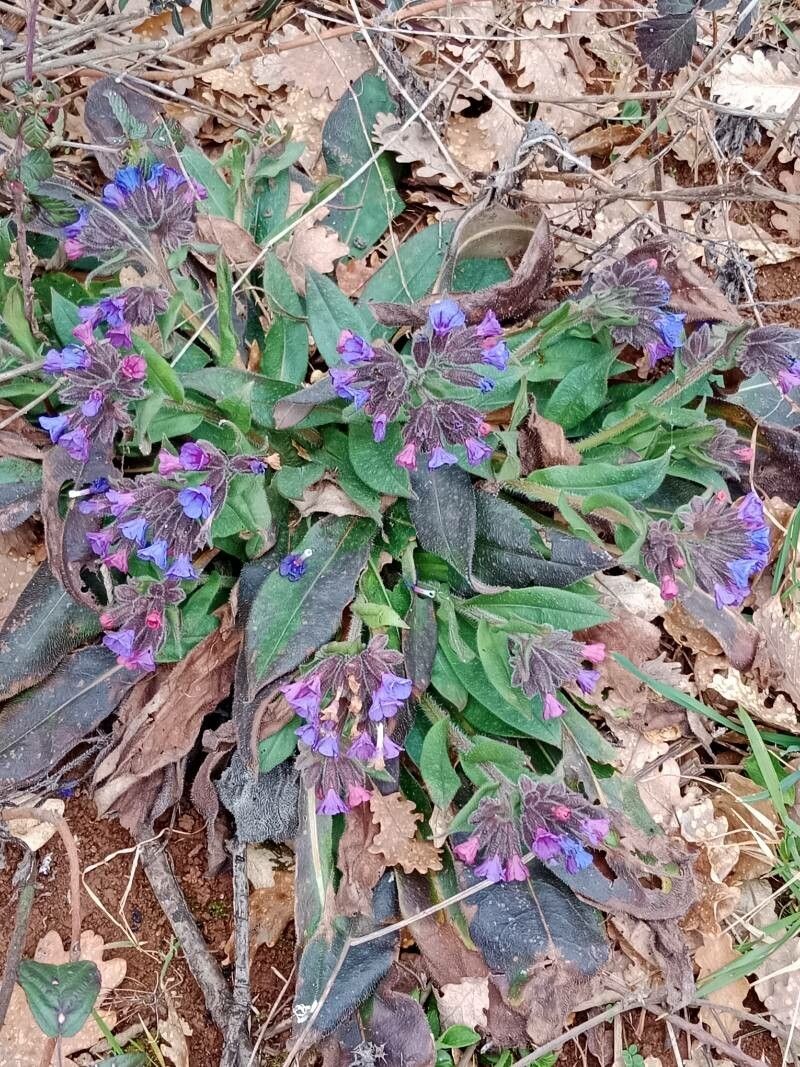
Well hello there, garden friends! It’s always such a joy to connect with fellow plant enthusiasts. Today, we’re going to talk about a plant that truly steals my heart every spring – the beautiful Pulmonaria montana, often called Mountain Lungwort.
Why You’ll Love Propagating Pulmonaria Montana
If you’ve ever seen Pulmonaria montana in bloom, you know the magic. Its delicate, bell-shaped flowers come in shades of pink, blue, and purple, often appearing in a delightful mix on the same plant. And the foliage! Oh, the foliage is speckled with gorgeous silver markings that add interest even when the plant isn’t flowering. Propagating it yourself is not only a budget-friendly way to fill your garden beds with more of these beauties, but it’s also incredibly satisfying. For beginners, I’d say Pulmonaria montana is moderately easy to propagate, especially with a few key pointers. Don’t be intimidated; you’ve got this!
The Best Time to Start
For Pulmonaria montana, the absolute sweet spot for propagation is in early spring, usually just as the plant is finishing its spectacular floral display. This is when the energy is flowing, and the plant is ready to put on new growth. You can also have success with division in late summer or early autumn, but spring is your prime window for a really high success rate.
Supplies You’ll Need
Gathering your tools beforehand makes the process so much smoother. Here’s what I always have on hand:
- Sharp, clean pruning shears or a garden knife: For making clean cuts.
- Well-draining potting mix: A good blend for perennials, or a mix of peat moss, perlite, and compost.
- Small pots or seed trays: For your new propagations. Make sure they have drainage holes!
- Rooting hormone (optional): This can give cuttings a little extra boost, but Pulmonaria montana roots reasonably well without it.
- Dibber or a pencil: For making holes in the soil.
- Watering can with a fine rose: For gentle watering.
- Labels and a permanent marker: So you don’t forget what you’ve planted and when!
Propagation Methods: Bringing More Lungworts to Life
There are a couple of very effective ways to grow more Pulmonaria montana. I find division to be the easiest and most reliable method for this particular plant.
1. Division: The Gardener’s Favorite
This is essentially splitting a mature plant into smaller pieces.
*   **Digging Up:** In early spring, gently dig around the base of your established Pulmonaria montana plant. The goal is to lift the entire root ball out of the soil with as little disturbance as possible.
*   **Separating:** Once the plant is out, you'll see it likely has multiple crowns or shoots. You can use your hands, a trowel, or even a clean spade to **gently pull or cut the root ball apart** into smaller sections. Aim for each section to have at least a few shoots and a good amount of roots attached. Don't worry if it looks a little rough; these plants are tough!
*   **Replanting:** Immediately replant your divisions into their new homes. Whether that's back into the garden or into pots. Make sure they are planted at the same depth they were previously growing. Water them in well.
2. Stem Cuttings (for the more adventurous!)
This method is a bit more involved but can yield quite a few new plants.
*   **Take Cuttings:** In early spring, select healthy, non-flowering shoots. Using your **sharp pruners, make a clean cut** about 2-3 inches below a leaf node (where a leaf meets the stem). Remove the lower leaves, leaving just a couple at the top.
*   **Prepare the Cutting:** You can dip the cut end into rooting hormone if you are using it.
*   **Plant Your Cuttings:** Fill small pots with your well-draining potting mix. Use a dibber or a pencil to make a small hole, then insert the cut end of the stem. **Gently firm the soil** around the cutting.
*   **Water and Cover:** Water the pot gently. I like to cover the pot with a clear plastic bag or place it in a propagator to **create a mini-greenhouse effect**. This helps maintain humidity, which is crucial for cuttings.
The “Secret Sauce” (Pro Tips)
Here are a few things I’ve learned over the years that really make a difference:
- Don’t overwater new divisions or cuttings. While they need moisture to root, soggy soil is the quickest way to invite rot. Let the top inch of soil dry out slightly between waterings.
- Give your divisions a little head start. If you’re potting up divisions, I find it helps to leave them in a slightly shadier spot for the first week or two as they settle in. They’ve been through a bit of a shock, and this gives them time to recover before facing full sun.
- Bottom warmth is your friend for cuttings. If you’re doing stem cuttings and you have a heat mat designed for propagation, using it can significantly speed up root development. Just a gentle warmth can make all the difference.
Aftercare & Troubleshooting
Once your new Pulmonaria montana divisions are planted, keep them consistently moist but not waterlogged. They’ll start to show new leaf growth within a few weeks, which is a great sign that they’re settling in and establishing roots. For cuttings, check for roots by gently tugging on them after about 3-4 weeks. If you feel resistance, you have roots! Gradually acclimate them to normal conditions by removing the plastic cover for increasing periods.
The most common issue you might encounter is rot. This is usually a sign of overwatering or poor drainage. If you see mushy stems or leaves that are browning and wilting despite moist soil, it’s likely rot. Give the soil a chance to dry out more thoroughly, and ensure your pots have excellent drainage. If a cutting has completely rotted, unfortunately, it’s best to discard it and try again.
Keep Nurturing Your Green Dreams!
Propagating Pulmonaria montana is a wonderful way to expand your garden and deepen your connection with these beautiful plants. Be patient with your new additions – they’re working hard to establish themselves. Enjoy the process, and remember that every gardener has moments of success and a few learning curves along the way. Happy gardening!
Resource:
https://identify.plantnet.org/k-world-flora/species/Pulmonaria%20montana%20Lej./data