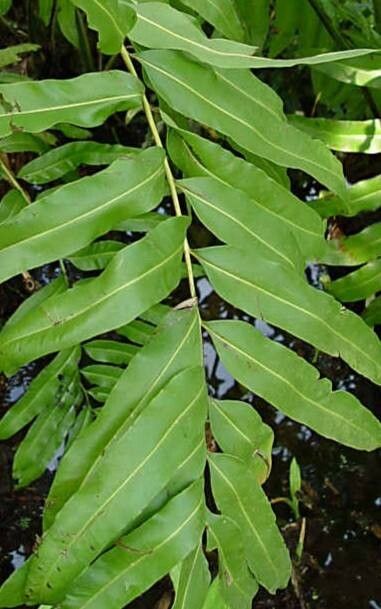
Hey there, fellow plant lovers! I’m so excited to talk about a plant that really captures the wild beauty of the tropics: Golden Leather Fern, or Acrostichum aureum. If you’ve ever seen this magnificent fern gracing coastal areas or marshy landscapes, you know it has a certain presence. Its substantial fronds, often with a beautiful golden hue, bring a lush, almost prehistoric feel to any space. Propagating it can feel a bit special, like you’re really bringing a piece of that wild magic home with you.
Now, if you’re new to the plant propagation game, you might be wondering if this is a good one to start with. Honestly, Acrostichum aureum can be a little more hands-on than, say, a pothos, but with a bit of care and the right approach, it’s absolutely achievable. It’s more about understanding its natural inclinations than struggling against them.
The Best Time to Start
For the highest success rate, I’ve found that late spring into early summer is your sweet spot. This is when the plant is actively growing and has the most energy. You want to propogate using healthy, new growth that’s firm but not yet woody. Think of it as capturing that vibrant, upward energy!
Supplies You’ll Need
Gathering your tools makes the process so much smoother. Here’s what I usually have on hand:
- Sharp, clean pruning shears or a sharp knife: For making precise cuts.
- Potting mix: A well-draining mix is key. I like a blend of peat moss or coco coir, perlite, and a bit of compost. You want it to hold moisture but not become waterlogged.
- Small pots or propagation trays: Anything that can hold your cuttings and a bit of soil. Terracotta pots are great because they breathe.
- Rooting hormone (optional but recommended): This gives your cuttings a little boost. Look for one with IBA.
- Watering can with a fine rose or a spray bottle: For gentle watering.
- Plastic bag or cloche: To create a humid microclimate around your cuttings.
- Patience! This is the most important tool of all.
Propagation Methods
Acrostichum aureum can be a bit specific in how it likes to be propagated, but division is often the most straightforward method for hobbyists.
1. Division (The Most Reliable Method)
This is how you’ll have the most luck with Acrostichum aureum. It involves separating a mature plant into smaller sections, each with its own healthy roots and at least one emerging frond.
- Gently remove the parent plant from its pot. If it’s in the ground, carefully dig around it.
- Inspect the root ball. You’re looking for natural divisions. The goal is to tease apart sections without causing too much damage. You might need to use your hands or a clean, sharp trowel to help.
- Make sure each section has a good clump of roots and at least one or two active growing points (where new fronds emerge).
- Pot up each division into its own pot filled with your well-draining potting mix.
- Water thoroughly until water drains from the bottom.
- Place the newly potted divisions in a location with bright, indirect light.
2. Spore Propagation (For the Adventurous!)
This is a more challenging, but fascinating, method. Golden Leather Fern reproduces by spores, much like other ferns.
- Look for spore-bearing structures on the underside of mature fronds. These are often brownish or rust-colored.
- Carefully collect a mature, sporulating frond. You can gently scrape the spores into a clean paper envelope or a small container.
- Sow the spores on a sterile propagation medium. This is typically a mix of peat moss and perlite, or a specialized fern germination mix.
- Keep the medium consistently moist and enclosed in a clear plastic bag or container to maintain high humidity. A warm location is crucial.
- Germination can take weeks to months. You’ll see tiny green, heart-shaped structures called prothalli.
- Once prothalli develop, you’ll need to introduce them to a finer soil mix and continue to maintain high humidity as tiny fernlets begin to emerge. This stage requires a lot of patience and careful observation.
The “Secret Sauce” (Pro Tips)
Here are a couple of things I’ve learned over the years that can really make a difference:
- For division, don’t be afraid to get your hands dirty. Gently tease the roots apart rather than hacking through them. If some roots break, that’s okay, but aim for as many intact ones as possible per division.
- When you’re potting up your divisions, make sure the crown (where the fronds emerge from the roots) isn’t buried too deeply in the soil. It needs to be level with the soil surface, or just slightly above. Too much moisture around the crown is an invitation for rot.
Aftercare & Troubleshooting
Once your new divisions are potted, give them a good soak. Keep them in bright, indirect light. Avoid direct sun, which can scorch their new, tender foliage. Water whenever the top inch of soil feels dry. Mist them occasionally if the air is dry, but remember, good air circulation is also important to prevent fungal issues.
The most common sign of trouble is rot. If you notice your cuttings wilting, turning mushy, or developing dark spots, it’s a sign of overwatering or poor drainage. The solution is simple: cut back on watering and ensure good airflow. If a cutting is really struggling, sometimes removing it and allowing the others more space and resources can save the rest of the batch. With spores, you might see damping-off, where the tiny seedlings collapse at the soil line. This is usually due to too much moisture and not enough airflow.
A Warm Farewell
Propagating plants is such a wonderful way to connect with the natural world and expand your own green kingdom. Remember, every gardener has had failures – it’s part of the learning process. Be patient with your Acrostichum aureum divisions, give them the right conditions, and before you know it, you’ll be rewarded with beautiful new ferns. Happy propagating!
Resource:
https://identify.plantnet.org/k-world-flora/species/Acrostichum%20aureum%20L./data