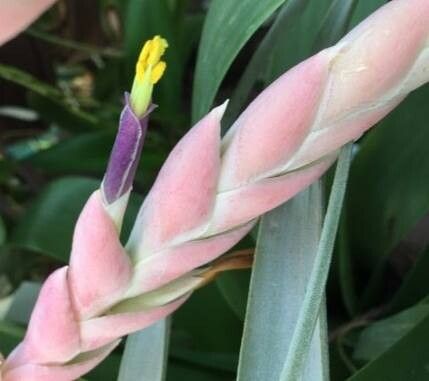
Hello, fellow plant enthusiasts! It’s so lovely to have you here. Today, we’re diving into the fascinating world of Tillandsia cretacea, a truly special air plant. Its silvery, elegant leaves have a way of captivating anyone who sees them. And the idea of bringing more of these beauties into your home? Pure joy! Propagating T. cretacea might sound a little daunting, but believe me, with a little guidance, it’s a journey that’s absolutely worth taking. For the absolute beginner, it’s a moderately challenging plant to propagate. Don’t let that deter you though – that’s what I’m here for!
The Best Time to Start
When it comes to coaxing new life from your Tillandsia cretacea, timing is everything. The ideal window for propagation is during its active growing season. For most of us, this means spring and early summer. You’ll know it’s a good time when you see new growth emerging, often from the base of the plant or as a distinct aerial pup. This surge of energy means the plant is more robust and ready to invest its resources in creating a new life.
Supplies You’ll Need
Gathering your tools beforehand makes the whole process so much smoother. Here’s what you’ll want to have on hand:
- Sharp, sterile pruning shears or a very sharp knife: We’ll need a clean cut.
- Distilled or rainwater: Tap water can be too harsh.
- A spray bottle: For gentle misting.
- A shallow dish or tray: To hold your cuttings.
- Optional: Rooting hormone (for division): While not strictly necessary for T. cretacea, some find it helpful.
- Optional: Small pebbles or bark chips: For a little aeration around divisions.
Propagation Methods
Tillandsia cretacea is primarily propagated through offsets (pups) or division. This plant doesn’t typically produce new plants from leaf cuttings in the same way some other houseplants do.
Method 1: Separating Offsets (Pups)
This is the most common and often easiest method for T. cretacea.
- Inspect your mother plant: Look for pups that have begun to form at the base of the parent plant. You’re looking for ones that are at least one-third the size of the mother plant and have developed their own roots.
- Gently tease apart: Sometimes, pups will detach with a gentle tug. If not, you’ll need to get a little more hands-on.
- Make a clean cut: Using your sterile shears or knife, carefully cut the pup away from the mother plant. Try to get as close to the base of the mother plant as possible without damaging it, and ensure you get any developing roots attached to the pup.
- Allow to callus: This is a crucial step! Place the newly separated pup in a well-ventilated spot, out of direct sunlight, for 24-48 hours. This allows the cut end to dry and form a protective callus, which helps prevent rot.
Method 2: Division (for larger clumps)
If your T. cretacea has grown into a larger clump with multiple pseudobulbs, you can divide it.
- Gently inspect the clump: Look for natural divisions or points where the plant seems to be splitting into separate sections.
- Use your sterile tool: Carefully insert your sharp knife or shears between the sections. You might need to gently wiggle the sections apart. The goal is to create clean breaks with as much of the root system intact as possible for each new division.
- Callus period: Just like with pups, place each division in a well-ventilated area for 24-48 hours to allow the cut surfaces to dry and callus over.
The “Secret Sauce” (Pro Tips)
Ah, the little nuggets of wisdom that make all the difference!
- Don’t rush the callusing: This is perhaps the most important “secret.” Airborne pathogens love moist, open wounds. Giving your pups and divisions ample time to dry out is your best defense against rot. Think of it as giving them a little natural bandage.
- Provide humidity, not constant wetness: Once they’ve callused, your new T. cretacea babies will appreciate a light misting once a day, but never let them sit in soggy conditions. Their roots need to breathe, and their leaves should dry out between waterings. A gentle spray is like a refreshing morning dew.
- Consider bottom warmth (subtly): If your propagation area is a bit cool, a gentle warmth from below can encourage root development. A heating mat set to its lowest setting, with the propagations placed on top (not directly on the mat, perhaps with a barrier like a small tray), can mimic the warmth of spring. Just be careful not to overheat!
Aftercare & Troubleshooting
Once your T. cretacea cuttings have callused and you feel they’re ready to settle in, you can place them in their new home.
- Initial placement: Position them in bright, indirect light. Avoid direct sun, which can scorch their delicate new growth.
- Watering: Begin with a light soaking in distilled or rainwater for about 15-30 minutes every week or two, depending on your home’s humidity. After soaking, gently shake out any excess water and place them upside down on a towel for a bit to ensure no water pools in the leaf axils.
- Signs of success: Look for new leaf growth emerging from the center of the plant and a firm feel to the leaves. Roots should start to develop within a few weeks.
- Troubleshooting – Rot: The most common issue you’ll face is rot, which often appears as a soft, mushy, discolored base. If you see this, immediately remove the affected part with your sterile tool. Increase air circulation and reduce watering frequency.
A Little Patience Goes a Long Way
Propagating plants is an act of faith and a lesson in patience. Some pups will take off immediately, while others might take their sweet time. Don’t be discouraged if not every attempt is a roaring success. Each one is a learning experience, and the joy you’ll feel when you see that first tiny puff of new growth on your baby Tillandsia cretacea is truly incomparable. Happy growing!
Resource:
https://identify.plantnet.org/k-world-flora/species/Tillandsia%20cretacea%20L.B.Sm./data