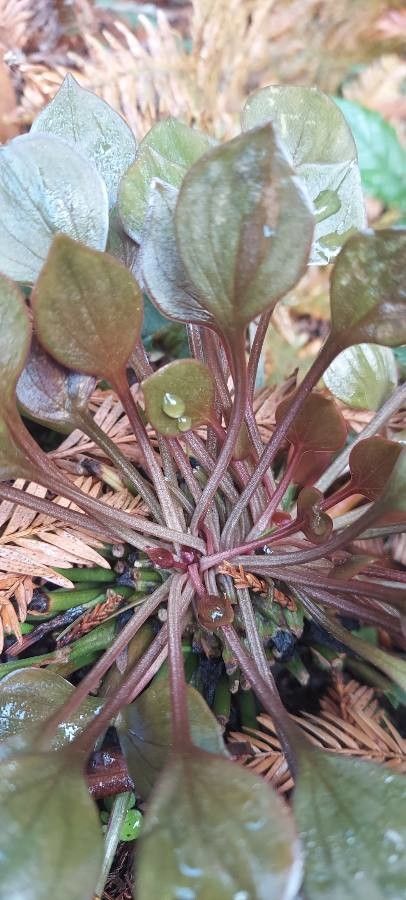
Hey there, fellow plant enthusiasts! Today, we’re diving into the wonderful world of Claytonia rubra, often known as Redstem Miner’s Lettuce. If you’re looking for a beautiful, edible green that’s not overly complicated, you’ve come to the right place. Its rosettes of tender, succulent leaves with lovely pinkish stems add a little charm to the garden, and harvesting its mild, slightly sweet greens is a treat. And the best part? Propagating it yourself is wonderfully rewarding. For those new to the plant propagation game, I’d say Claytonia rubra is quite beginner-friendly. You’ll be amazed at how easily you can expand your supply!
The Best Time to Start
The sweet spot for propagating Claytonia rubra is typically in the spring or early fall. These cooler, moist periods encourage robust root development without the stress of intense heat or freezing temperatures. You can also often successfully propagate from plants that are already actively growing, just before they start to flower heavily.
Supplies You’ll Need
Gathering your tools beforehand makes the whole process smoother. Here’s what I usually have on hand:
- Sterile potting mix: A good quality, well-draining mix is crucial. Look for something with perlite or vermiculite.
- Sharp pruning shears or a clean knife: For taking cuttings.
- Small pots or trays: With drainage holes, of course!
- Watering can or spray bottle: For gentle watering.
- Rooting hormone (optional, but helpful): Especially for stem cuttings.
- Clear plastic bag or dome: To create a humid microclimate.
- Pot labels: So you don’t forget what you planted where!
Propagation Methods
Claytonia rubra is quite forgiving, and a couple of methods work wonderfully.
Method 1: Stem Cuttings
This is my go-to for this plant. It’s quick and effective.
- Select healthy stems: Look for stems that are actively growing but not flowering profusely. You want stems that are a few inches long.
- Make a clean cut: Using your sterile pruning shears or knife, make a cut just below a leaf node. A node is where a leaf attaches to the stem.
- Prepare the cutting: Gently remove the lower leaves, leaving just a few at the top. If you’re using rooting hormone, dip the cut end into it now.
- Plant the cutting: Fill your small pots with the sterile potting mix. Make a small hole and insert the prepared cutting so the leaf nodes are buried in the soil. Gently firm the soil around it.
- Water and cover: Water the soil gently until it’s moist but not soggy. Then, place the pot inside a clear plastic bag or cover it with a dome to maintain high humidity.
Method 2: Division
If your plant has become a bit crowded or you have a mature specimen, division is a great option.
- Gently remove the plant: Carefully take the entire plant out of its pot or the ground.
- Inspect the root ball: Look for natural divisions where the plant has grown in clumps.
- Separate the clumps: Using your fingers or a clean trowel, gently pull or cut the root ball into smaller sections. Each section should have roots and some top growth.
- Replant: Pot up each division into its own container with fresh potting mix, or plant them directly into your garden beds. Water them in well.
The “Secret Sauce” (Pro Tips)
Here are a few little tricks I’ve learned over the years that really boost success with Claytonia rubra.
- Don’t overcrowd: When taking cuttings, give each one a bit of space in its pot. They need airflow to prevent rot.
- Warmth helps: While spring and fall are ideal, if you’re propagating in a cooler season, try placing your pots on a gentle heat mat. Just a little warmth from below can really encourage root formation faster.
- Humidity is key: That plastic bag or dome is your best friend. Keep it on until you see new leaf growth, which signals that your cutting has rooted successfully.
Aftercare & Troubleshooting
Once you see signs of new growth on your cuttings or divisions, it’s time to transition them.
Gradually remove the plastic bag or dome over a few days to acclimatize them to normal humidity. Continue to water them regularly, ensuring the soil stays consistently moist but never waterlogged. If you used rooting hormone and planted your cuttings in a well-draining mix, you should see new leaves emerging within a few weeks.
The most common issue you might encounter is rot. This usually happens if the soil is too wet or there’s not enough airflow. If you notice a cutting looking mushy and discolored, it’s usually best to discard it to prevent the rot from spreading. Don’t be discouraged! Sometimes nature just doesn’t cooperate, and that’s okay.
A Little Patience Goes a Long Way
Propagating plants is a bit like tending to your garden in general – it requires a little patience and a lot of observation. Don’t get discouraged if every single cutting doesn’t make it. Each attempt teaches you something new. Celebrate the wins, learn from the misses, and most importantly, enjoy the process of creating more of your own beautiful, edible greens. Happy propagating!
Resource:
https://identify.plantnet.org/k-world-flora/species/Claytonia%20rubra%20(Howell)%20Tidestr./data