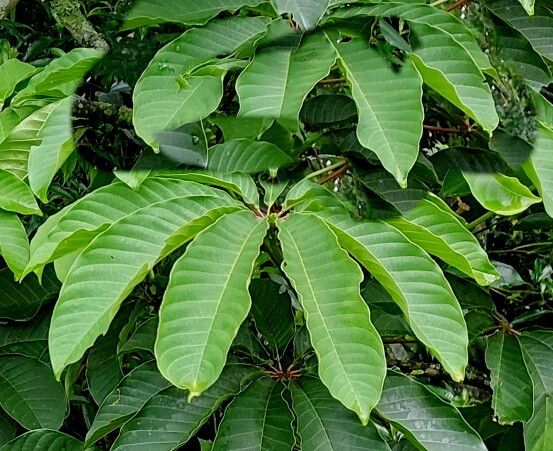
Oh, hello there! Grab yourself a mug of something warm, and let’s chat about a truly special plant: Pseudobombax grandiflorum. You might know it by its common names, like the White-Flowered Silk Floss Tree, or perhaps the ‘Palo Borracho’ – the Drunk Tree. It’s famous for its upright, often bottle-shaped trunk and, of course, those absolutely breathtaking, showy white flowers that appear even before the leaves. Trust me, seeing one of these in bloom is a sight you won’t forget.
Propagating your own Pseudobombax grandiflorum is such a rewarding adventure. It’s a way to double, triple, or even more your enjoyment of this beauty, allowing you to share cuttings with friends or simply fill your garden with more of its magic. Now, I won’t sugarcoat it: while not impossible, propagating this particular tree can be a little bit of a challenge for absolute beginners. It requires a bit of patience and an eye for detail, but with these tips, I’m confident you can succeed.
The Best Time to Start
For the highest success rates, late spring or early summer is usually your sweet spot. This is when the plant is actively growing, or just coming into its most vigorous growth phase. You’ll want to take cuttings from healthy, mature stems that haven’t flowered or produced fruit yet. Think of it as asking the plant for a healthy ‘baby’ – you want it to be full of life and energy!
Supplies You’ll Need
To get started on your propagation journey, gather these essentials:
- Sharp, clean pruning shears or a sharp knife: For making clean cuts that heal well.
- Rooting hormone: A powder or gel that helps cuttings develop roots more readily. I personally lean towards powders for ease of use.
- Well-draining potting mix: A good starting point is a mix of equal parts perlite and coco coir, or a commercial cactus and succulent mix. You want it to drain like a sieve!
- Small pots or trays: Clean containers with drainage holes are a must.
- Clear plastic bags or a propagator lid: To create a humid environment for your cuttings.
- Watering can with a fine rose or a spray bottle: For gentle watering.
- Optional: A heat mat: This can significantly speed up root development.
Propagation Methods
We’ll focus on the most reliable method for Pseudobombax grandiflorum: stem cuttings.
-
Taking the Cuttings: Choose a healthy, vigorous stem that’s about pencil-thick. Make a clean cut just below a leaf node (that’s the point where a leaf attaches to the stem). You’re aiming for cuttings that are about 6-8 inches long. Remove the lower leaves, leaving just a few at the top. If any of the leaves are very large, I often find I cut them in half to reduce water loss.
-
Applying Rooting Hormone: Dip the cut end of the stem into your chosen rooting hormone. Tap off any excess. This step is crucial for encouraging root formation.
-
Planting the Cuttings: Fill your clean pots with your well-draining potting mix. Make a small hole in the center with your finger or a pencil. Gently insert the bottom 2-3 inches of the cutting into the hole. Firm the soil gently around the stem.
-
Creating Humidity: Water the soil lightly until it’s evenly moist, but not soggy. Then, cover the pot with a clear plastic bag or place it inside a propagator with a lid. This traps moisture and creates the humid environment your cuttings need to stay turgid while they focus on growing roots.
The “Secret Sauce” (Pro Tips)
Here are a few things I’ve learned over the years that can really tip the scales in your favor:
- A little warmth goes a long way. If you have a heat mat, place your pots on it. Pseudobombax cuttings love a bit of gentle bottom heat; it’s like a cozy invitation for those roots to emerge.
- Don’t let your cuttings sit in water without aeration. While some plants do well in water propagation, Pseudobombax can be prone to rot if left too long in stagnant water. If you do try water initially, make sure the leaves never, ever touch the water. Change the water every few days. Honestly, I find potting them up straight away in the correct mix usually gives better results.
- Patience is truly a virtue with this one. Don’t be tempted to pull your cuttings out too soon to check for roots. Give them at least 6-8 weeks, and sometimes even longer, before you even think about investigating.
Aftercare & Troubleshooting
Once you see new growth – new leaves appearing – that’s a fantastic sign! It means roots have formed. Gradually acclimate your new plant to normal humidity by opening the plastic bag or propagator lid a little each day over a week or so. Continue to keep the soil consistently moist but not waterlogged.
The most common failure you’ll see is rot. This usually happens if the soil is too wet for too long, or if the cutting isn’t getting enough air circulation. A cutting that shrivels and turns black or mushy is almost certainly rotten. If you see this, discard it and try again with a fresh cutting and perhaps a slightly better-draining mix. Sometimes, it’s just a matter of trial and error until you get the feel for it.
So there you have it! Propagating Pseudobombax grandiflorum might take a little extra care, but the reward of nurturing a new life from a simple cutting is immense. Don’t get discouraged if your first attempt isn’t a roaring success. Every gardener learns through doing, and the journey itself is incredibly fulfilling. Enjoy the process, be patient, and soon you’ll have more of these magnificent trees to admire! Happy growing!
Resource: